
Newsroom · Eterna-owned guide
The Impersonation Response Guide
What actually happens, step by step, after you discover a deepfake or an account impersonating you, and why the order matters. There's no fixed timeline that fits every case; the sequence below is what matters, not the clock.
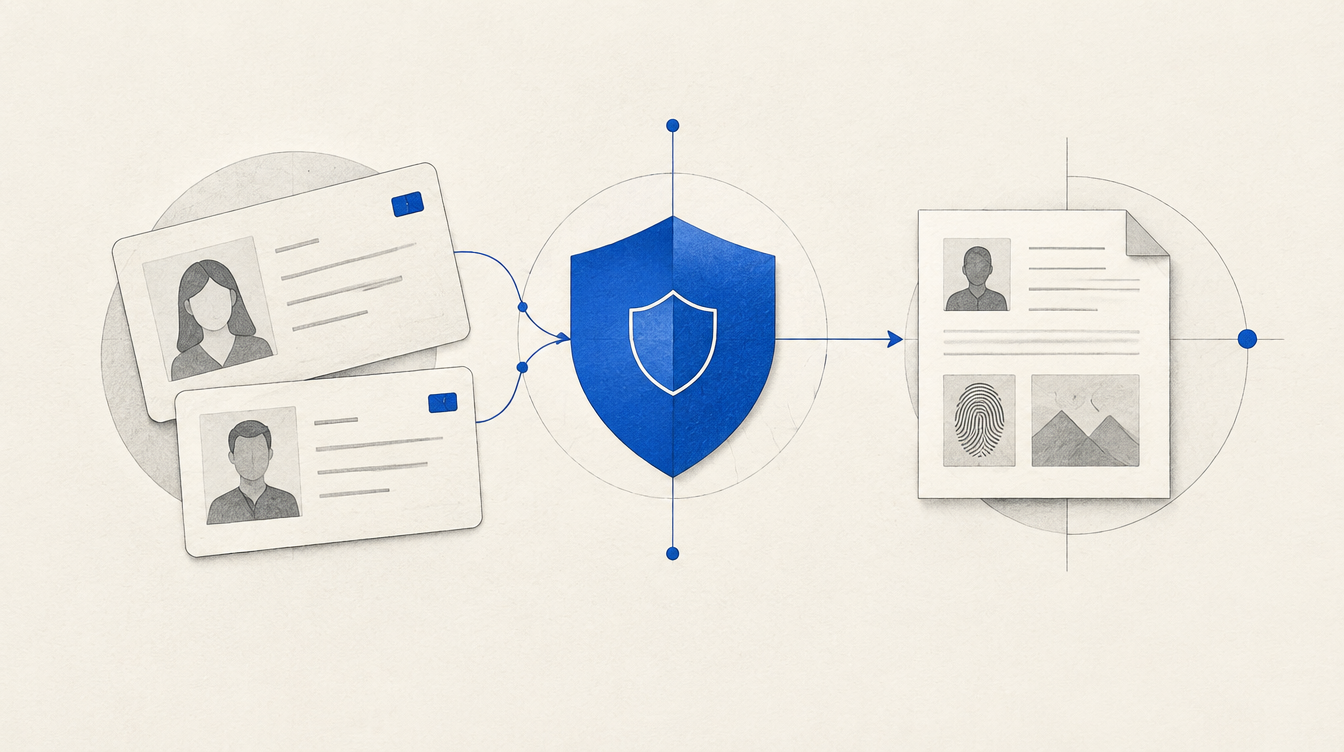
Most people encounter this problem for the first time in the worst possible way: a friend sends a screenshot, a client asks an awkward question, or a video shows up that looks and sounds like you saying something you never said. The instinct is to act immediately: report the account, post a denial, call a lawyer. Some of that instinct is right. Some of it can weaken the case. Here's what a properly run response looks like, in order. How long each step takes varies by platform, jurisdiction and case complexity; this guide doesn't promise a removal or a fixed completion time, because no one honestly can.
Step 1: Preserve before you react
The most damaging mistake early on is reacting publicly before preserving evidence. Platforms remove content, accounts get deleted, pages update; once that happens, the record needed to prove what was said, where, and when can disappear with it.
Screenshot or record the content in context: the full post, the account profile, the URL, timestamps and visible engagement. Save the direct link. Do not engage with the account, comment, or share it further; engagement can increase distribution and complicate later claims about how far it spread.
Step 2: Secure your own accounts
Impersonation and account compromise often travel together, so treat account security as part of the response, not an afterthought. Change passwords on the affected platform and any account sharing that password, confirm two-factor authentication is enabled, review active sessions and connected third-party apps for anything unrecognized, and check that recovery email and phone details haven't been altered. If the genuine account itself shows signs of compromise, most platforms have a dedicated hacked-account recovery flow that is faster than a general report queue.
Step 3: Establish what you're dealing with
Not everything that looks like a deepfake is one, and not every impersonation is coordinated. Is it synthetic media, account impersonation, or both? Is there a discernible motive (financial scam, harassment, brand sabotage), or does it look opportunistic? What is the actual reach right now, versus what it could become?
This is also where a disciplined response avoids a common failure: publicly declaring something "fake" or "AI-generated" before that's been substantiated. See the Deepfake Verification Guide for what substantiation actually requires.
Step 4: Document the case
Build a clear, chronological evidence file before you submit anything: what was posted, where, when it was first observed, how it has spread, and any prior contact with the account or its owner. A stronger submission (to a platform, a lawyer or an investigator) includes a concise statement of why the content is false or unauthorized, proof of authority to act on the affected party's behalf, and the specific policy the content violates, cited by name.
Step 5: Report through the platform's actual channels
Platform reporting tools are necessary but rarely sufficient alone; high-volume platforms triage reports algorithmically, and a bare report with no context often sits in a generic queue. Use the specific report category that matches the violation (impersonation, synthetic/manipulated media, or account compromise are usually distinct categories), attach the documented evidence, and cite the exact policy violated rather than describing it in general terms.
Step 6: Communicate with stakeholders (facts only)
Loop in the people who need to know before they hear it elsewhere: internal stakeholders such as leadership, legal and communications, and (where relevant) external stakeholders such as clients or partners who may encounter the content. Share only what's confirmed versus what's still being assessed, avoid speculation about who is responsible or why, and avoid promising a specific removal outcome or timeline before either is actually known.
Step 7: Authorize the response, then escalate deliberately
This is the step most purely automated tools skip, because it's a human judgment step, not a technical one: before any enforcement action is taken on someone's behalf, the affected person or their verified representative should explicitly authorize it. This protects against a second failure mode that's just as damaging as inaction: an overzealous response that draws far more attention to a low-reach post than it ever would have received on its own.
With authorization confirmed, escalation typically follows: direct platform enforcement channels using the evidence file; domain or hosting-level takedown for content outside major platforms; search de-indexing for already-removed content still appearing in results; law enforcement or regulator referral where legal thresholds are met; and a public statement, if warranted, only once the above is underway.
Step 8: Monitor for reuploads and recurrence
A successful takedown of one instance doesn't mean the content is gone. The same media or a near-duplicate frequently resurfaces on mirror accounts, other platforms, or reposts by third parties. Keep the search terms, reverse-image or reverse-video references, and account identifiers from the original case on hand, and check periodically rather than assuming a single removal closes the matter. Ongoing monitoring is what turns a one-time takedown into an actual resolution.
Why the order matters
Skipping straight to a public statement or a bare platform report is understandable: it's the natural reaction to something that feels like an emergency. It's also how weak cases get built, evidence gets lost, and low-reach incidents get amplified by the response itself. If you need a condensed version of this process for executives and comms teams making a fast first call, see the Executive First Hour Response Playbook.
Basis for this guide
This walkthrough reflects general trust-and-safety incident-response practice and Eterna's stated operating model: verified authorization before enforcement, human approval for consequential actions. It does not reference a specific client case; any future case example would require separate, explicit client consent before publication. It is educational guidance, not a guarantee of any particular outcome or timeline.